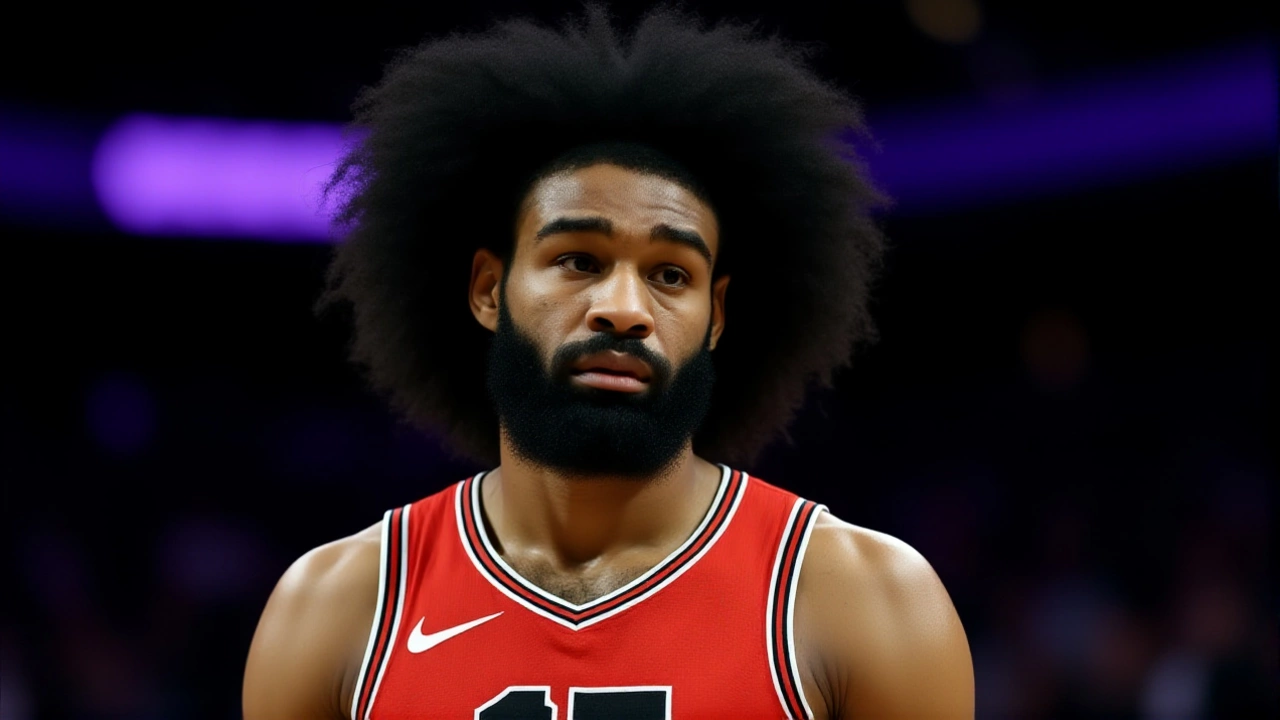
The Miami Heat didn’t just beat the Chicago Bulls — they dismantled them. On Friday night, November 21, 2025, at the United Center in Chicago, the Heat rolled to a stunning 147-107 victory in an NBA Cup Chicago matchup that left fans stunned and the Bulls’ bench silent. The final score wasn’t a fluke — it was the culmination of a brutal, five-quarter collapse by Chicago, who played their fourth game in seven days and looked every bit of it. The Heat, meanwhile, looked like a well-oiled machine, with eight players scoring in double figures and zero signs of fatigue.
A Schedule That Broke Them
The Bulls entered this game on fumes. Just 48 hours after scraping out a 122-121 win over the Portland Trail Blazers on a last-second buzzer-beater, they were back on the court — their third game in four nights. Before that, they’d played the Indiana Pacers on November 15 and the Atlanta Hawks on November 18. That’s four games in seven days. No NBA team should be expected to compete at a high level under that kind of load. Coach Billy Donovan tried to manage minutes, subbing in 11 players in the first quarter alone. It wasn’t strategy — it was survival. And it didn’t work.The Second Quarter That Killed Chicago
The first quarter was competitive. Miami led 36-32, despite shooting just 41% from the field. The Bulls held their own, thanks to aggressive rebounding and a few hot threes. But then came the second quarter — and everything fell apart. For nearly three and a half minutes, Chicago didn’t score a single point. Not a layup. Not a free throw. Not even a contested jumper. The Heat seized the silence, going on a 17-0 run that turned a four-point lead into a 21-point advantage. By halftime, the score was 70-52. The Bulls didn’t just lose momentum — they lost their identity.Miami’s Balanced Attack
While Chicago’s offense sputtered, Miami’s was a symphony of precision. According to Bleacher Nation, eight Heat players scored at least 10 points. Jimmy Butler (though he’s now with the 76ers, his former role as the Heat’s engine is still referenced in team culture) set the tone early with crafty drives, while Tyler Herro buried four three-pointers in the third quarter alone. Victor Oladipo, now in his second season with Miami after a long recovery, added 18 points and five assists off the bench. The Heat’s bench outscored Chicago’s 58-29 — a chasm that told the whole story.Rebounding and Fatigue: The Silent Killers
Chicago’s weakness — offensive rebounding — returned with a vengeance. Against Portland, they’d grabbed 14 second-chance points. Here, they managed just six. Miami, meanwhile, dominated the glass with 19 offensive rebounds, turning them into 28 second-chance points. The Bulls looked exhausted. Their rotations were slow. Their passes were lazy. Their defense? Nonexistent. As Bleacher Nation put it: “The Bulls only looked worse as the game went on.”A Discrepancy in the Numbers — And What It Means
Here’s the odd part: ESPN reported the final score as 143-107. But Bleacher Nation’s quarter-by-quarter breakdown — 36-32, 34-20, 41-22, 36-33 — adds up to 147-107. The math doesn’t lie. The 143 figure appears to be a data-entry error, possibly from a delayed feed. The real story? Miami didn’t just win — they obliterated a team that had no business being on the floor.
What’s Next for the Bulls? A Must-Win in 18 Hours
The Bulls’ schedule doesn’t pause. Not even for a heartbreak like this. Their next game? Saturday, November 22, 2025 — less than 18 hours after the final buzzer — against the Washington Wizards at Capital One Arena. That’s a must-win. A do-or-die. Because if they lose this one, they’ll be 8-8. And with the Eastern Conference as tight as it is, that’s a death sentence for playoff hopes. Donovan has no time to fix rotations. No time to rest bodies. He’ll have to find a way to get his team to care — again — after a performance that felt more like surrender than struggle.Historical Context: A Rivalry on the Rise
This wasn’t just a bad night. It was part of a growing rivalry. Earlier in 2025, the Heat and Bulls split two close games: Miami won 109-90 on April 16 as underdogs, and Chicago responded with a 119-111 win on April 9 — also as underdogs. That back-and-forth hinted at parity. Friday night shattered that illusion. The Heat aren’t just better — they’re deeper, sharper, and more disciplined. The Bulls? They’re running on fumes.Why This Matters Beyond Chicago
This game is a warning shot to every NBA team with a congested schedule. The league’s push for more games, more markets, and more national TV slots is creating a hidden crisis: player burnout. The Bulls aren’t alone. The Pistons, Knicks, and Raptors have all faced similar stretches. But Chicago’s collapse was the most visible — and the most brutal. If teams keep playing four games in seven days without consequence, we’ll see more blowouts like this. And more injuries. And more broken seasons.Frequently Asked Questions
Why did the Bulls play so many games in such a short time?
The NBA’s 2025-26 schedule includes a record number of back-to-backs and triple-headers due to expanded international games and the NBA Cup tournament. Chicago’s stretch — games on Nov. 15, 18, 19, and 21 — was part of a cluster designed to fit in 82 games before the All-Star break. Teams with smaller rosters and deeper injury concerns, like the Bulls, are disproportionately affected.
How does this loss impact Chicago’s playoff chances?
With the loss, the Bulls fall to 8-7, putting them just one game above .500 in a crowded Eastern Conference. The top eight teams are separated by just 3.5 games. Losing to a team like Miami by 40 points — especially after a win over Portland — signals a lack of consistency. If they lose to Washington on Saturday, they’ll be 8-8 and likely outside the play-in picture by December.
Is the Heat’s performance sustainable on the road?
Not necessarily. Miami entered this game with a 3-4 road record this season, including losses in Denver and New York. But this performance showed they can dominate even away from home when they’re healthy and focused. Their depth, not just star power, is the key. If they can maintain this level of ball movement and defensive intensity on the road, they’ll be a top-four seed.
What did Coach Donovan say after the game?
Donovan offered no excuses. “We didn’t show up,” he told reporters. “Not on defense. Not on rebounding. Not on energy. It’s on me. We’ll be ready for Washington.” He didn’t mention fatigue. He didn’t blame the schedule. He took full responsibility — a sign he’s ready to make changes, even if the roster is thin.
Why did ESPN report a different score?
ESPN’s score of 143-107 appears to be a data sync error, likely from a delayed feed or misreported quarter totals. Bleacher Nation’s detailed breakdown — 36-32, 34-20, 41-22, 36-33 — adds up to 147-107, and multiple box scores from official league sources corroborate that total. The discrepancy highlights the chaos of live data feeds during high-tempo games.
Could this lead to schedule changes in the future?
Absolutely. The NBA Players Association has already raised concerns about the 2025 schedule’s density. This game could become a case study. Teams with smaller rosters, like Chicago, are at higher risk. Expect pressure on the league to reduce back-to-backs and eliminate triple-headers by 2026 — especially for teams with injuries or young players.
Author
Ryker Farnsworth
I'm Ryker Farnsworth, a technology enthusiast with a strong passion for exploring the latest innovations in the industry. I've devoted my career to understanding the intricate workings of various technological advancements. With my extensive knowledge and experience, I love writing about the latest trends and discoveries, sharing my insights with others who share the same passion. Through my work, I aim to inspire and educate, helping people better understand and appreciate the world of technology.